Accountable Research Organization

Engineered to give you confidence and control over your cardiometabolic clinical study

Cardiometabolic trials are won and lost on coordination.

Large patient populations, competitive sites, and background therapy complexity create a system where enrollment, site performance, and data quality drift independently and silently.

Lindus integrates every function into a single operating model so risks surface early enough to act on.

Challenges and strategies in cardiometabolic trials

Enrollment success is engineered, not left to chance

Obesity
Obesity
Challenge
Lindus approach

Commercial GLP-1 access complicating placebo arms

Challenge

Broad GLP-1 availability depletes treatment-naive pools and drives placebo-arm dropout, as patients who experience weight regain abandon trials for commercial alternatives. Investigators hesitate to enroll in placebo-controlled designs when effective options are commercially available. Screen failure rates rise as washout-required candidates refuse to pause therapies that are visibly working.

Lindus approach

Lindus queries 40M+ EHR records by diagnosis codes, medication history, and treatment gaps to identify candidates before site activation. Patient concierge coordinators sustain placebo-arm retention through scheduled touchpoints, transport, and direct communication: reducing the dropout-to-commercial-therapy pattern that erodes your control arm.

Concealed behavioral and psychiatric comorbidities

Challenge

Stigma leads patients to conceal eating disorder behaviors during intake, which surfaces only during late-stage psychological evaluations. Sites invest in anthropometric and metabolic screening before discovering disqualifying comorbidities. This creates late screen failures, unpredictable conversion rates, and compromised baseline integrity from unreliable self-reported dietary data.

Lindus approach

Lindus queries documented psychiatric diagnoses, psychotropic medication histories, and behavioral health encounters against your exclusion criteria before site referral: bypassing unreliable self-report. AI-assisted screening automates eligibility matching at scale, so candidates reaching your sites have already cleared behavioral exclusions on clinician-documented clinical records.

Placebo abandonment for commercial therapies

Challenge

Patients randomized to placebo experience visible weight regain and abandon trials to resume GLP-1 therapies available commercially. This asymmetric attrition threatens statistical power and compromises long-term extension data. Sites must backfill continuously from unpredictable emergency referral networks, inflating operational budgets and extending timelines.

Lindus approach

Patient concierge coordinators maintain active relationships with placebo-arm participants: arranging transport, managing stipends, and providing sustained contact through highest-attrition phases. When dropout occurs, direct-to-patient campaigns backed by EHR-based identification deploy rapid multi-channel backfill without diverting site staff from enrolled participants.

Weight-loss expectations driving placebo dropout

Challenge

T2D patients with obesity phenotypes enroll seeking dual glycemic and weight-loss benefit. When allocated to placebo or weight-neutral arms, absence of visible phenotypic change prompts withdrawal to access GLP-1 therapies commercially. This asymmetric attrition compromises long-term endpoint powering and forces sites into continuous backfill that strains capacity.

Lindus approach

Lindus identifies candidates whose documented treatment history and metabolic profiles suggest glycemic rather than weight-loss motivation using EHR-based pre-screening, selecting for populations more likely to persist through placebo arms. Patient concierge coordinators maintain engagement during high-risk dropout windows through scheduled contact and logistics management.

Fractured standard-of-care algorithms

Challenge

Treatment sequencing diverges widely across healthcare systems, creating heterogeneous control arms and complicating comparator selection. Reconciling distinct patient journeys into a single protocol delays timelines, while divergent background therapy creates variable drug interaction profiles that force complex adverse event adjudication across a distributed site network.

Lindus approach

Lindus queries real-world prescribing patterns across planned geographies from 40M+ EHR records before protocol finalization, modeling where your comparator design aligns with local standard care. AI-assisted screening identifies candidates whose medication histories already satisfy your pharmacological eligibility window, so sites receive verified candidates rather than unfiltered referrals.

Strict glycemic and medication stability criteria

Challenge

Protocols mandating inadequate glycemic control within narrow HbA1c bounds while requiring stable background medication regimens catch a shrinking intersection of the T2D population. Progressive metabolic phenotypes experience fluctuations that displace them from stability windows, and sites conduct exhaustive chart reviews to verify prescription histories: extending timelines and driving screen failures.

Lindus approach

Lindus's EHR database queries longitudinal HbA1c trajectories and prescription stability windows to identify patients currently within your protocol's glycemic and medication bounds. AI-assisted screening automates eligibility verification against documented clinical data, centrally pre-vetting candidates before your sites conduct a single chart review.

Automated device integration complicating endpoints

Challenge

Standard-of-care closed-loop delivery systems actively correct glucose excursions. Protocols requiring device disablement face high refusal and dropout rates. Permitting varied commercial devices generates proprietary data streams that are difficult to harmonize, creating noisy efficacy endpoints and data architecture complexity that compounds throughout the trial lifecycle.

Lindus approach

Lindus's data management and data programming harmonizes disparate device data streams into a single standardized pipeline: accounting for device-driven variability as a covariate rather than discovering it as endpoint noise at analysis. Feasibility assessment models real-world device usage patterns so eligibility criteria reflect what patients will actually tolerate.

Adult-onset is classification and care routing

Challenge

Adults with gradual-onset T1D are routinely misclassified as T2D in primary care, receiving incorrect management before deterioration triggers reclassification. Prior exposure to excluded medications generates protocol exclusions, and fragmented care histories make manual chart screening unreliable. Identifying eligible patients requires reaching into primary care networks that lack research infrastructure.

Lindus approach

Lindus queries autoantibody results, longitudinal metabolic profiles, and medication history, bypassing unreliable diagnosis codes, to identify misclassified patients across primary care records in 40M+ EHR data. Site augmentation deploys virtual site staff into primary care locations to activate sites where these patients actually present.

Tight post-diagnosis enrollment windows

Challenge

Protocols requiring enrollment within a narrow post-diagnosis window overlap with the acute crisis of new diagnosis. Cognitively overloaded families decline research participation, and patients who might qualify age out of the eligibility window before reaching stability. Sites relying on established databases miss most incident cases entirely.

Lindus approach

Lindus queries EHR diagnosis codes and autoantibody results to flag newly diagnosed patients still within your inclusion window, enabling rapid outreach before families stabilize outside the eligibility period. Patient concierge coordinators absorb scheduling, transport, and education logistics so families are not choosing between disease management and trial participation.

Protocol-induced placebo inflation

Challenge

Mandated lifestyle counseling for both arms triggers behavioral changes that drive histological improvement in the placebo cohort. This inflated placebo response compresses the observable efficacy delta, requiring expanded sample sizes and extended timelines. Introducing commercial metabolic therapies mid-study compounds the confounding and erodes the comparative signal further.

Lindus approach

Lindus stress-tests lifestyle counseling provisions against real-world weight-loss patterns using EHR-based feasibility modeling, projecting placebo-arm response rates before protocol finalization. Embedded biostatistics models the sample-size and timeline implications of different counseling approaches, giving decision-ready evidence to right-size enrollment before you lock.

Liver biopsy consent and scoring discordance

Challenge

Serial liver biopsies create enrollment bottlenecks as patients refuse repeat sampling, and divergent histological scoring frameworks produce interpretive variance between local investigators and central readers. Local investigators clear patients who are subsequently rejected on central read, generating late screen failures after significant site investment.

Lindus approach

Lindus pre-screens candidates against central-read-aligned histological criteria using EHR records to filter likely post-biopsy failures. Patient concierge coordinates scheduling, transport, and patient education across serial biopsy visits. The EHR database identifies patients with documented prior sampling history who represent a more biopsy-tolerant subpopulation.

Flight to commercial comorbidity treatments

Challenge

Participants with overlapping metabolic conditions abandon studies to pursue GLP-1 agonists for weight and diabetes management. Because liver disease remains largely asymptomatic, patients prioritize immediate treatment for visible comorbidities when randomized to placebo. Unapproved background therapy erodes the observable difference between arms and forces continuous backfill.

Lindus approach

Patient oncierge coordinators maintain scheduled contact throughout placebo arms: arranging transport, managing visit logistics, and sustaining engagement during asymptomatic periods when the rationale for continued participation is least tangible. When dropout occurs, EHR-based identification rapidly surfaces replacement candidates not already on competing commercial therapies.

Fasting triglyceride level variability

Challenge

Triglyceride levels respond acutely to minor dietary intake and metabolic shifts. Patients who qualify at initial screening frequently fall outside the eligibility range by the baseline visit due to routine lifestyle variation. This biomarker instability drives high screen-to-randomization ratios and complicates separation of pharmacological effects from transient lifestyle shifts.

Lindus approach

Lindus queries longitudinal lipid panel histories to identify candidates with documented sustained TG elevation rather than single qualifying values. AI-assisted screening flags those whose historical variance pattern predicts baseline failure. Patient concierge coordinates fasting compliance preparation and visit scheduling across both screening and baseline windows.

Differentiating monogenic from multifactorial phenotypes

Challenge

Monogenic and multifactorial chylomicronemia present with identical clinical markers but require distinct trial designs. Standard primary care settings rarely order genetic panels needed to differentiate etiology, making EHR pre-screening by diagnosis code unreliable. Sites face specialist bottlenecks that extend screening windows and drive screen failures when panels return negative.

Lindus approach

Lindus queries longitudinal TG profiles and medication-response trajectories to pre-identify likely monogenic candidates before genetic confirmation is ordered. AI-assisted screening concentrates costly genetic paneling on high-probability candidates, and virtual site staff route specimen logistics centrally to unlock community sites beyond tertiary lipid clinics.

Acute pancreatitis risk and placebo hesitancy

Challenge

Patients managing severe hypertriglyceridemia live with ongoing pancreatitis risk. Washout of existing standard-of-care therapies or placebo assignment creates psychological friction: abdominal discomfort triggers immediate withdrawal to seek active intervention. Fear-driven disengagement truncates longitudinal efficacy data and forces backfill through unpredictable emergency referral networks.

Lindus approach

Patient concierge coordinators maintain proactive regular contact with enrolled participants: specifically addressing pancreatitis-anxiety during washout and placebo periods through education and rapid escalation pathways. Feasibility assessment stress-tests placebo-arm viability against documented TG severity and rescue-medication patterns, informing design decisions before enrollment opens.

Diagnostic criteria mismatch and practice divergence

Challenge

WHO and ADA diagnostic criteria define prediabetes at different glycemic thresholds, creating classification problems in multinational trials. Community practices rely on routine HbA1c while protocols require glucose-loading tests that primary care lacks infrastructure to perform. This mismatch inflates feasibility estimates and restricts viable sites to specialized research units.

Lindus approach

Lindus stress-tests eligibility thresholds against EHR metabolic profiles spanning both WHO and ADA frameworks before protocol finalization. AI-assisted screening pre-qualifies candidates on documented HbA1c and fasting glucose trends so only confirmed matches are routed to sites for confirmatory OGTT.

OGTT requirements driving screen failures

Challenge

OGTT-based eligibility contrasts with routine non-fasting HbA1c standard in community care, subjecting asymptomatic patients to prolonged fasting and repeated blood draws. The substantial coefficient of variation in glucose results between visits in the same patient further compounds the problem for an already narrow glycemic eligibility window.

Lindus approach

Lindus queries longitudinal HbA1c and fasting glucose histories to pre-identify patients whose metabolic profiles cluster favorably against OGTT thresholds. Patient concierge coordinates fasting-visit preparation and scheduling logistics to reduce the pre-screening drop-off that accumulates when asymptomatic patients face procedurally burdensome entry criteria.

Asymptomatic status versus protocol burden

Challenge

Patients with early dysglycemia feel entirely well, creating a persistent disconnect between lived experience and the procedural intensity trials demand. Repeated glucose tolerance tests, serial phlebotomies, and weight-stability run-in periods drive mid-study disengagement. Apathy-driven withdrawal degrades longitudinal data completeness and compromises primary endpoint evaluability.

Lindus approach

Patient concierge coordinators contextualize each assessment within each participant's own metabolic trajectory to sustain engagement in a protocol offering no symptomatic feedback. Citrus ePRO/eCOA automates visit-window reminders, and the integrated CTMS surfaces early disengagement signals: routing at-risk participants to concierge intervention before withdrawal occurs.

No items found for this category.

Category
Thank you! Your submission has been received!
Oops! Something went wrong while submitting the form.
Case study

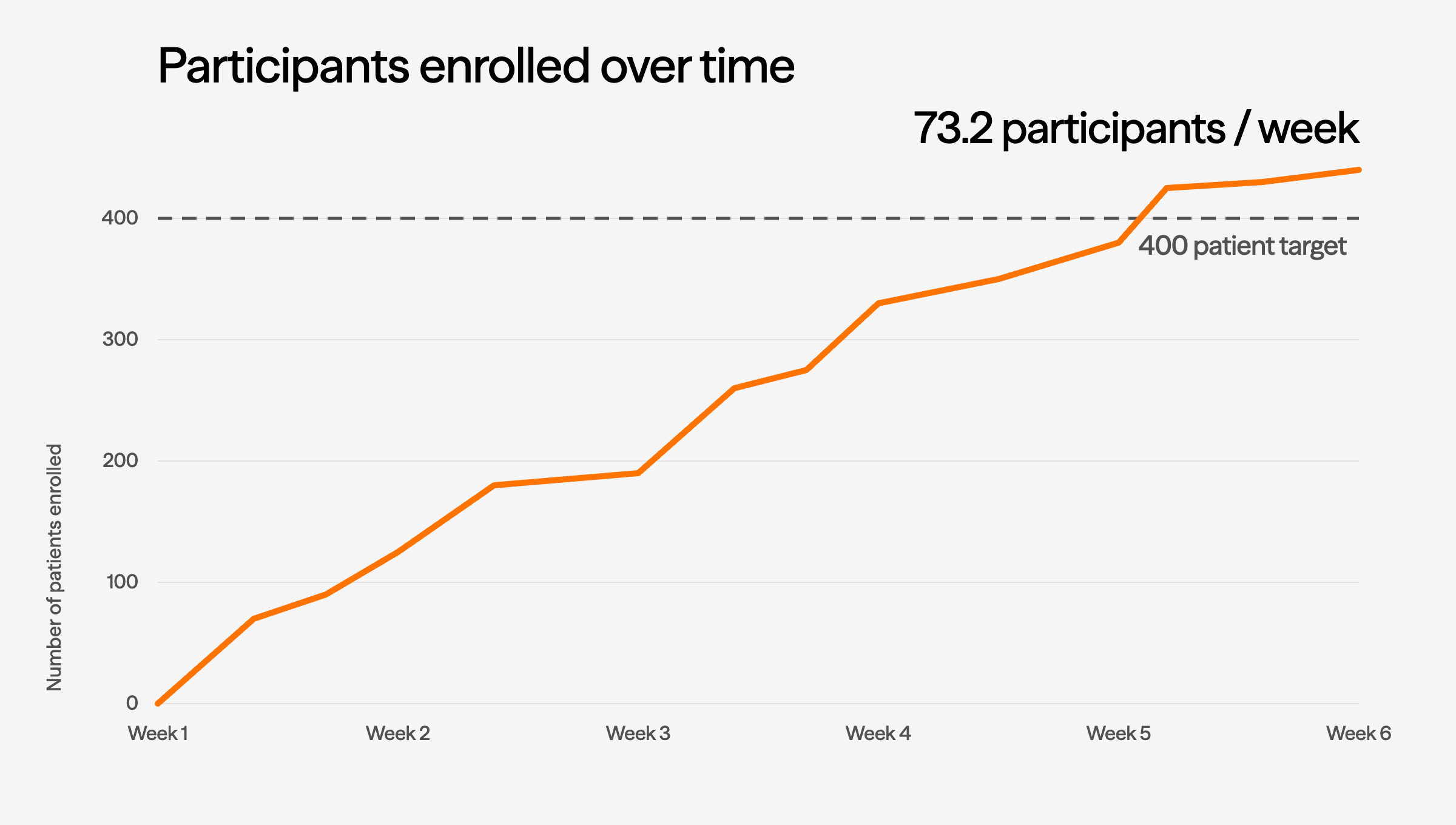
Exceeded enrolment timelines and diversity objectives in 400 patient, 5 site pivotal clinical trial in weight management

Graphic Lindus
6 weeks
Total enrollment of over 400 patients achieved in 6 weeks, 3 months ahead of schedule
51%
of participants reported a non-white ethnicity, greatly exceeding Sponsor’s target

Geographic footprint

Over 160 full-time staff operating across the US, UK, and Europe, with integrated APAC partnerships. Wherever your trial needs to run, the infrastructure is already in place.

World Map Dark Mode Lindus
Core presence
Integrated partnership
Meet our cardiometabolic experts

Scientific advisors

Dr. Carel le Roux
Carel is the Director of the Metabolic Medicine Group at University College Dublin. He served as principal investigator on the Boehringer Ingelheim Phase 2 survodutide trial — a glucagon/GLP-1 receptor dual agonist for obesity — published in The Lancet Diabetes & Endocrinology. He is a co-investigator on the SYNCHRONIZE Phase 3 programme and the TRIUMPH retatrutide trials in obesity and obstructive sleep apnea. He has over 350 publications with 22,000+ citations across obesity, type 2 diabetes, and gut hormone research.
Dr. Tim Garnett
Tim spent 23 years at Eli Lilly, serving as Chief Medical Officer and Senior Vice President from 2008 to 2021. He oversaw regulatory affairs, patient safety, and clinical development across the US, Europe, China, and Japan, and led the global development of duloxetine across depression, pain, and incontinence indications. He also managed the raloxifene (EVISTA) programme in women's health. He currently chairs the board of Ophirex and serves as a board member for MapLight Therapeutics and Cardiol Therapeutics.
Dr. Alexander Miras

Clinical operations team

Dr. Carel le Roux
Carel is the Director of the Metabolic Medicine Group at University College Dublin. He served as principal investigator on the Boehringer Ingelheim Phase 2 survodutide trial — a glucagon/GLP-1 receptor dual agonist for obesity — published in The Lancet Diabetes & Endocrinology. He is a co-investigator on the SYNCHRONIZE Phase 3 programme and the TRIUMPH retatrutide trials in obesity and obstructive sleep apnea. He has over 350 publications with 22,000+ citations across obesity, type 2 diabetes, and gut hormone research.
Dr. Tim Garnett
Tim spent 23 years at Eli Lilly, serving as Chief Medical Officer and Senior Vice President from 2008 to 2021. He oversaw regulatory affairs, patient safety, and clinical development across the US, Europe, China, and Japan, and led the global development of duloxetine across depression, pain, and incontinence indications. He also managed the raloxifene (EVISTA) programme in women's health. He currently chairs the board of Ophirex and serves as a board member for MapLight Therapeutics and Cardiol Therapeutics.
Dr. Alexander Miras
This is some text inside of a div block.

Lorem ipsum dolor sit amet, consectetur adipiscing elit. Suspendisse varius enim in eros elementum tristique. Duis cursus, mi quis viverra ornare, eros dolor interdum nulla, ut commodo diam libero vitae erat. Aenean faucibus nibh et justo cursus id rutrum lorem imperdiet. Nunc ut sem vitae risus tristique posuere.