Accountable Research Organization

Engineered to give you confidence and control over your respiratory clinical study

Respiratory trials are won and lost before the patient presents.

Biologic-depleted pools, exacerbation events that create data gaps at the most critical timepoints, and acute presentation dynamics that close eligibility before sites are ready create a system where enrollment velocity is capped by timing rather than patient availability.

Lindus integrates real-time EHR identification, decentralized visit delivery during peak illness, and continuous monitoring into a single operating model built around the compressed windows respiratory trials actually operate in.

Challenges and strategies in respiratory trials

Enrollment success is engineered, not left to chance

Obesity
Obesity
Challenge
Lindus approach

Trigger diary compliance during exacerbation cycles

Challenge

Asthma trials depend on daily ePRO symptom diaries and peak flow logging to establish baseline severity and capture primary endpoints. Exacerbation events: clinically significant moments the trial most needs to capture,  are also when patients are most symptomatic, fatigued, and least able to log consistently, directly compromising efficacy signal integrity.

Lindus approach

Citrus ePRO/eCOA configures symptom and peak flow endpoints with automated reminders calibrated to capture windows, maintaining adherence during exacerbation cycles without adding coordinator burden. Centralized real-time monitoring surfaces missing entries within hours so patient concierge coordinators intervene before data gaps become irrecoverable endpoint losses.

Biologic-experienced patient pool depletion

Challenge

Rapid penetration of approved biologics has depleted the treatment-naive pools that trials historically relied on. Washout from partially effective therapies triggers exacerbation rebounds patients refuse to risk. Screen failure rates climb as sites exhaust databases, and enrollment extends into markets with lower biologic access that may not reflect your target population.

Lindus approach

Lindus queries 40M+ EHR records by documented biologic exposure, treatment history, and washout-eligible therapy gaps to identify candidates before sites begin manual chart review. AI-assisted screening pre-qualifies at scale on clinical records, so sites receive candidates with realistic washout paths rather than unfiltered referrals.

Post-exacerbation attrition before endpoint capture

Challenge

Patients experiencing acute exacerbations during the trial are at greatest risk of dropout: either hospitalized and removed from the outpatient protocol, or discharged and disengaged before completing follow-up. This creates systematic data gaps at the most clinically important timepoints, and the remaining cohort trends toward milder phenotypes that compress the apparent treatment effect.

Lindus approach

Patient concierge coordinators maintain direct post-exacerbation contact, arranging transport to rescheduled visits before data loss becomes irrecoverable. Citrus ePRO/eCOA delivers automated reminders through recovery windows so symptom data captures the full exacerbation-resolution arc rather than truncating at the acute event.

Exacerbation capture in a fragmented care system

Challenge

COPD exacerbations present across emergency departments, primary care, and pulmonology: rarely at trial sites. Patients receive rescue courses in non-study settings without site notification, introducing unreported concomitant medications and missing efficacy event documentation. Standard monitoring visits are too infrequent to detect these episodes, leaving critical endpoint data uncaptured.

Lindus approach

Citrus ePRO/eCOA captures symptom deterioration signals in real time, and patient concierge coordinators proactively contact participants at first signs of worsening: coordinating care pathways that route patients back through the trial before an undocumented rescue course has already been administered.

Spirometry reproducibility across decentralized sites

Challenge

COPD trials depend on spirometry for eligibility and primary endpoints, but technique-sensitive measurements are highly operator-dependent. Variability in technician training and equipment calibration across a distributed site network generates inconsistent baseline values, inflated screen failure rates, and endpoint noise requiring expanded sample sizes to accommodate.

Lindus approach

Centralized real-time monitoring flows spirometry data quality signals across all sites into a continuous view, surfacing operator-level performance deviations before they compound. Site augmentation deploys virtual respiratory technicians to sites where technique drift is identified, enabling retraining without waiting for the next scheduled monitoring visit.

High comorbidity burden driving protocol deviations

Challenge

COPD patients typically present with cardiovascular disease, metabolic syndrome, and anxiety generating concomitant medication use that conflicts with protocol restrictions. Undisclosed rescue medications, dose adjustments, and intercurrent hospitalizations accumulate silently between monitoring visits, compromising safety and efficacy analyses at database lock.

Lindus approach

Citrus ePRO/eCOA captures concomitant medication use and symptom burden continuously, giving your monitoring team a real-time signal on compliance drift. Patient concierge coordinators educate participants on protocol restrictions and maintain regular contact to detect emerging comorbidity management changes before they generate deviations.

Device washout and polysomnography logistics

Challenge

Active CPAP users must withdraw from therapy to establish a baseline, but returning oxygen desaturation creates drowsy-driving risk and discomfort that drives consent refusals and pre-randomization dropout. Scheduling multiple overnight polysomnograms around constrained sleep lab availability extends screening timelines and creates bottlenecks stalling enrollment velocity.

Lindus approach

Lindus pre-identifies non-adherent and undertreated OSA patients whose washout carries lower rebound risk, concentrating enrollment on candidates more likely to complete the polysomnography sequence. Patient concierge coordinators compress the washout-to-polysomnography interval by coordinating sleep lab scheduling and arranging transport to mitigate drowsy-driving exposure.

Atypical presentations obscuring identification

Challenge

Women and patients with comorbid insomnia frequently present with fatigue, cognitive symptoms, and sleep fragmentation rather than classic daytime sleepiness. Standard questionnaires miss these patients, routing them to psychiatry or primary care. Reliance on sleep clinic referral networks skews enrolled populations toward classic male phenotypes and limits demographic diversity.

Lindus approach

Lindus queries 40M+ EHR records by documented comorbidities, hypnotic prescribing patterns, and polysomnography results, going beyond sleepiness questionnaire scores, to surface atypical OSA candidates managed outside sleep medicine. AI-assisted screening matches on documented clinical data rather than self-report, expanding identification beyond traditional referral channels.

Post-resolution dropout after symptom improvement

Challenge

Minimally symptomatic OSA patients lack the intrinsic motivation that symptom relief provides. When repeated overnight polysomnograms require travel and sleep disruption, patients who feel subjectively well view continued participation as purely burdensome. Progressive loss-to-follow-up leaves primary endpoint datasets incomplete and erodes statistical power.

Lindus approach

Patient concierge coordinators arrange transport to overnight polysomnography visits, coordinate scheduling around participant preferences, and maintain proactive between-visit contact that converts logistical friction into continued participation. Citrus ePRO/eCOA captures subjective sleep-quality endpoints continuously, preserving data completeness even on nights when device compliance lapses.

NTM culture screening delays

Challenge

Excluding active NTM infections requires slow-growing sputum cultures with multi-week turnaround. During this holding period, patients with high exacerbation burden may experience acute flares requiring rescue antibiotics: triggering baseline instability violations and screen failures after significant investment. The resulting bottleneck forces sponsors to activate larger site footprints to absorb the yield loss.

Lindus approach

Lindus queries documented microbiology histories and prior NTM culture results to pre-filter high-risk candidates before your screening funnel, concentrating confirmation on patients whose records suggest lower NTM risk. Patient concierge coordinators maintain engagement throughout the multi-week holding period, managing treatment-hold logistics and preventing disengagement-driven dropout.

Pathogen confirmation versus clinical stability paradox

Challenge

Active microbiological confirmation is required alongside an exacerbation-free stability window: but when patients are stable, bacterial loads frequently fall below detection. Active pathogen presence often signals an acute flare that disqualifies on stability criteria. This paradox forces multiple re-screening attempts consuming coordinator bandwidth without producing randomized participants.

Lindus approach

Lindus queries longitudinal EHR records to identify patients with chronic pathogen colonization histories most likely to culture positive during stable intervals. Patient concierge coordinators time sputum collection visits to the narrow window when both conditions are most likely to co-exist: reducing the re-screening loops that erode yield.

Sputum diary burden and regimen fatigue

Challenge

Daily sputum quantification logging adds administrative burden to patients already managing intensive airway clearance regimens. The psychological weight of tracking purulent output combined with complex dosing schedules drives diary fatigue and covert non-adherence. Missing entries compromise exacerbation endpoint evaluability in exactly the patients most representative of your target population.

Lindus approach

Citrus ePRO/eCOA configures sputum-diary endpoints with automated reminders timed to patients' existing clearance routines, reducing cognitive load. Centralized real-time monitoring surfaces missed entries and dose gaps in real time, enabling patient concierge coordinators to intervene before non-adherence patterns become protocol deviations.

Fragmented cross-specialty referral networks

Challenge

Chronic cough patients cycle across primary care, ENT, gastroenterology, and pulmonology depending on dominant symptoms. No single specialty owns the diagnosis, traditional investigator databases yield sparse pre-screening pools, and coordinators must build cross-disciplinary referral pathways to intercept patients still within a treatable window.

Lindus approach

Lindus queries 40M+ EHR records across diagnosis codes, medication history, and visit patterns spanning ENT, GI, and pulmonology to surface chronic cough patients by longitudinal clinical footprint. AI-assisted screening pre-qualifies against protocol criteria at scale, and patient concierge re-engages patients who abandoned specialist pathways out of diagnostic frustration.

Acoustic monitoring consent friction

Challenge

Continuous acoustic monitoring requires 24-hour audio recording that generates high consent refusal rates. Natural cough variability and at-home device errors produce unreadable data requiring repeat monitoring periods. Centralized over-read introduces lag that extends screening timelines, and specialized infrastructure requirements limit your viable site pool.

Lindus approach

Participant pre-screening centrally qualifies candidates before site contact, filtering patients unlikely to tolerate monitoring. eConsent presents recording expectations digitally before in-person consent, reducing surprise-driven refusals. Site augmentation deploys virtual coordinators to infrastructure-ready locations, expanding throughput without requiring new site activation.

Cardiovascular medication washout coordination

Challenge

ACE inhibitor-induced cough requires washout coordination with primary care or cardiology before patients can qualify. Patients hesitate to alter functioning cardiac regimens, and multi-specialty coordination extends screening timelines. Incomplete documentation of medication switches risks protocol deviations and introduces noise into safety and efficacy data.

Lindus approach

Lindus pre-screens candidates against medication exclusion criteria using documented EHR records, filtering by cardiovascular prescribing history before site contact. Patient concierge coordinators manage cross-specialty washout coordination directly: scheduling cardiology consultations and maintaining contact through therapy transition to prevent the dropout that accumulates when patients navigate medication changes unsupported.

Strict onset windows driving screen failures

Challenge

Influenza trials require laboratory confirmation within narrow symptom-onset timeframes, but patients delay care until symptoms escalate. By the time central lab results confirm eligibility, many candidates have aged out of the protocol window. Sites screen large volumes only to exclude patients on elapsed timing: stalling enrollment during unpredictable seasonal waves.

Lindus approach

Lindus deploys direct-to-patient outreach during viral season to pre-educate high-risk populations so they present at first symptoms. Patient concierge coordinators compress the identification-to-site interval with rapid scheduling and transport, and AI-assisted screening pre-filters candidates on EHR diagnosis codes and visit timing before site coordinators invest in manual eligibility review.

Vulnerable populations presenting atypically

Challenge

Elderly patients present with delirium, falls, or cardiovascular events rather than classic respiratory symptoms. Viral etiology is recognized only after standard workup: by which time the eligibility window has often closed. Proxy consent requirements add administrative delay in settings already compressed by acute clinical demands.

Lindus approach

Lindus pre-identifies elderly high-risk patients through EHR comorbidity records and establishes contact with legally authorized representatives before acute admission. Patient concierge coordinators manage LAR coordination and rapid scheduling to compress the recognition-to-randomization interval, while eConsent enables remote digital authorization eliminating paper-based delays during the medical emergency.

Dense visit schedules during peak illness

Challenge

Protocols mandate compressed early visit schedules for PK sampling and viral swabbing precisely when patients are most symptomatic, contagious, and physically unable to travel repeatedly. High rates of missed visits and attrition follow. Conducting invasive procedures during peak viral shedding requires isolated infrastructure that limits the pool of capable sites.

Lindus approach

Lindus deploys hybrid site models shifting acute-phase assessments to home via virtual site staff nurses: removing travel burden during peak illness while maintaining protocol-grade data capture. Patient concierge coordinates transport for remaining required site visits around each participant's symptom trajectory, reducing the missed-visit rate that drives early dropout.

Pediatric care-seeking lagging viral peak

Challenge

Infants typically arrive at the emergency department days after upper respiratory onset, once lower airway involvement emerges. By this point viral load has peaked, rendering them ineligible for early-intervention protocols. Identifying candidates requires reaching families before the acute ED presentation: a structural gap that traditional site-based recruitment cannot bridge.

Lindus approach

Lindus queries EHR records to flag infants with documented RSV risk factors: prematurity, chronic lung disease, prior bronchiolitis,  before acute presentation, then deploys direct-to-patient outreach to reach caregivers upstream of the ED visit. Patient concierge compresses scheduling, transport, and consent logistics so narrow eligibility windows are captured rather than missed.

Acute pediatric consent in distress settings

Challenge

Enrolling infants with respiratory distress requires complex consent discussions in acute care settings where caregivers are managing an immediate clinical crisis. The prospect of experimental participation compounds parental distress, generating high refusal rates and systematically skewing enrolled populations away from the most acute phenotypes the trial is designed to study.

Lindus approach

Lindus pre-identifies at-risk infants through EHR records before acute presentation, enabling caregiver awareness outreach upstream of the ED. eConsent shifts protocol review into structured digital modules caregivers engage at their own pace, compressing the bedside discussion to signature. Patient concierge absorbs post-admission logistics so site staff focus on clinical care.

Post-resolution attrition in ambulatory adults

Challenge

In immunocompetent adults, RSV resolves rapidly. Once acute symptoms subside, participants resume normal routines and perceive ongoing longitudinal swabbing and diary requirements as unnecessary burdens. Progressive loss-to-follow-up leaves secondary endpoint datasets incomplete and the effort to re-engage unmotivated participants consumes monitoring resources without reliably recovering evaluable data.

Lindus approach

Citrus ePRO/eCOA deploys endpoint-specific automated reminders that maintain swab scheduling and diary adherence through the asymptomatic protocol tail. Patient concierge coordinators maintain direct participant relationships: managing stipends, scheduling, and transport,  sustaining engagement after symptom resolution when intrinsic motivation has disappeared.

No items found for this category.

Category
Thank you! Your submission has been received!
Oops! Something went wrong while submitting the form.
Case study

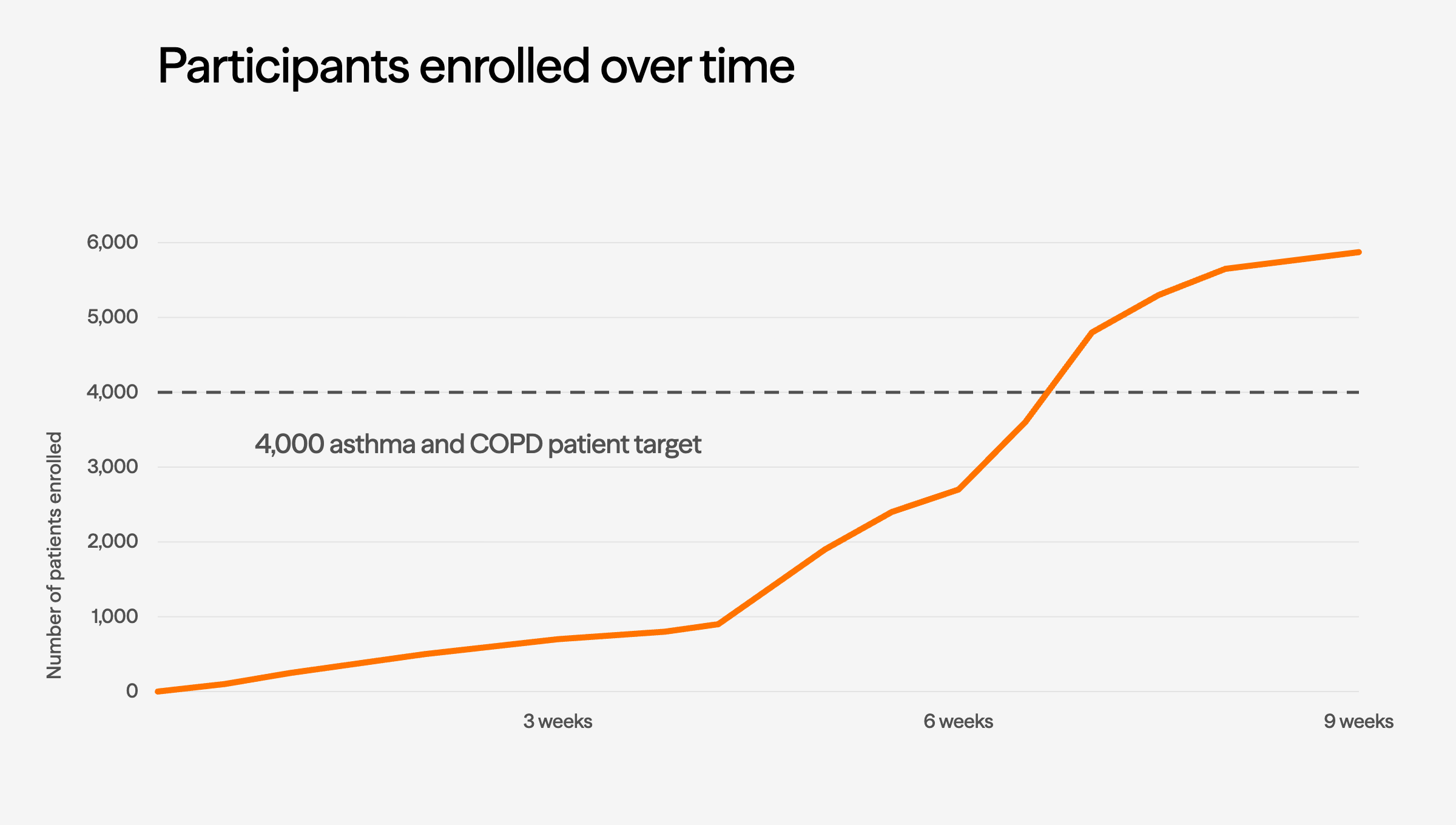
How central enrollment can deliver large enrollment volumes;Recruiting >5,800 patients for a Phase IV RCT in Asthma/COPD

5,873
Participants enrolled across 89 referring sites within 9 weeks

Geographic footprint

Over 160 full-time staff operating across the US, UK, and Europe, with integrated APAC partnerships. Wherever your trial needs to run, the infrastructure is already in place.

World Map Dark Mode Lindus
Core presence
Integrated partnership
This is some text inside of a div block.

Lorem ipsum dolor sit amet, consectetur adipiscing elit. Suspendisse varius enim in eros elementum tristique. Duis cursus, mi quis viverra ornare, eros dolor interdum nulla, ut commodo diam libero vitae erat. Aenean faucibus nibh et justo cursus id rutrum lorem imperdiet. Nunc ut sem vitae risus tristique posuere.