Accountable Research Organization

Engineered to give you confidence and control over your psychiatry clinical study

Psychiatry trials are won and lost on access and retention.

Washout requirements that destabilize vulnerable patients, comorbidity exclusions that eliminate most of the clinical population, and populations that disengage silently rather than formally withdrawing create a system where eligible patients are structurally difficult to enroll and the hardest to keep.

Lindus integrates centralized identification across non-specialist pathways, concierge support through the washout and observation periods where dropout concentrates, and real-time attrition monitoring into a single operating model.

Challenges and strategies in psychiatry trials

Enrollment success is engineered, not left to chance

Obesity
Obesity
Challenge
Lindus approach

Validating prior treatment resistance

Challenge

Verifying inadequate response to past therapies depends on subjective patient recall of fluctuating mood states and fragmented medication histories across providers. Sites spend disproportionate time reconstructing dosing timelines to confirm treatment-resistant status, and the resulting late screen failures, after significant investment, demoralize coordinators and suppress site motivation.

Lindus approach

Lindus queries documented antidepressant histories, dose titration patterns, and medication sequences from 40M+ EHR records to verify prior treatment failure on clinical records rather than patient recall. AI-assisted screening automates eligibility matching at scale, delivering history-validated candidates and decoupling site selection from in-house record completeness.
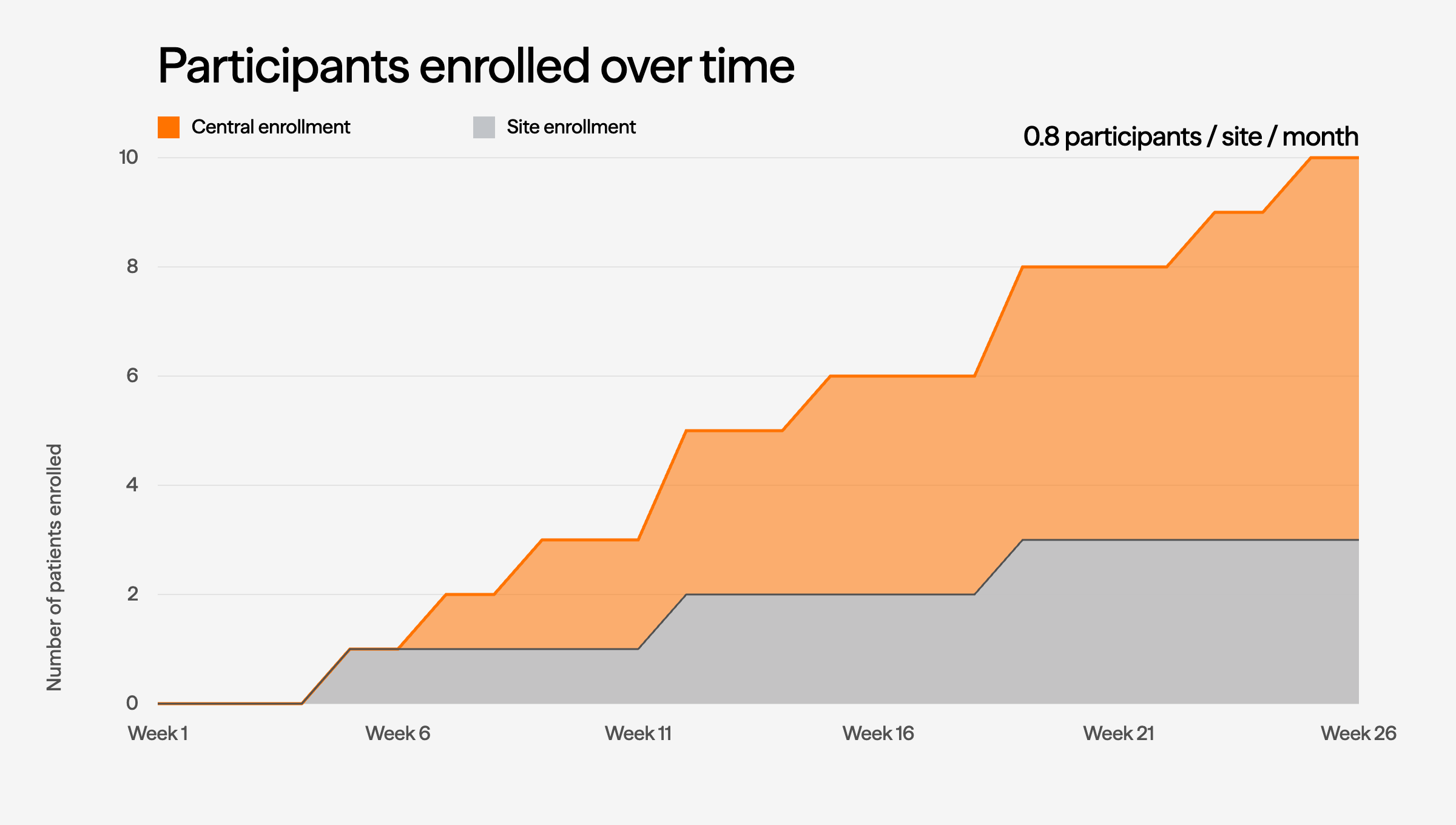

Open-label lead-in attrition

Challenge

Prospective enrichment designs generate large top-of-funnel cohorts that yield few randomized participants. Patients drop out due to side effects, early response rendering them ineligible, or motivational loss through prolonged pre-treatment phases. Sites managing high-churn pre-randomization populations experience coordinator fatigue and may deprioritize the protocol for simpler studies.

Lindus approach

AI-assisted screening pre-qualifies candidates against enrichment criteria using documented EHR data, delivering a higher-conversion intake pool. Direct-to-patient campaigns provide continuous backfill as lead-in attrition occurs. Patient concierge coordinators absorb staged visit logistics (scheduling, transport, and education) freeing site coordinators from managing a high-churn pre-randomization population.

Anhedonia-driven visit and data attrition

Challenge

Severe melancholic depression directly impairs the executive function needed for trial participation. Patients lack motivation to complete frequent patient-reported outcomes or attend morning clinic visits, and caregiver fatigue triggers household-level dropout. Disease-driven apathy creates missing assessment windows at the primary endpoints that matter most.

Lindus approach

Patient concierge coordinators arrange transport, coordinate caregiver relief, and manage stipend disbursement: offloading logistical burden that executive dysfunction makes insurmountable. Hybrid site models shift assessments to home where protocol permits, and Citrus ePRO/eCOA delivers endpoint-specific reminders that capture data between visits even when in-person attendance lapses.

Medication washout driving consent refusals

Challenge

Patients with accumulated treatment failures arrive with therapeutic burnout, and protocols requiring washout of partially stabilizing medications are experienced as re-entering acute psychiatric distress voluntarily. High consent refusal rates and pre-randomization dropout follow. Sites struggle to maintain enrollment targets without burning through their limited TRD population.

Lindus approach

Lindus queries documented medication histories to pre-identify TRD patients whose prescribing profiles suggest washout feasibility before site contact. Patient concierge coordinators absorb transport, scheduling, and dosing-site coordination throughout the washout period, sustaining attendance through the interval where dropout risk peaks.

Learned helplessness and premature disengagement

Challenge

Patients internalize therapeutic futility after multiple treatment failures. Placebo assignment or delayed efficacy is interpreted as another personal failure, triggering abrupt disengagement rather than formal withdrawal. This creates censored longitudinal datasets at exactly the timepoints needed for durability and relapse prevention analyses.

Lindus approach

Patient concierge coordinators maintain continuous personalized contact throughout placebo arms and delayed-efficacy periods: managing scheduling, stipends, and sustained touchpoints that counteract the isolation accelerating dropout. Citrus CTMS surfaces participant-level attrition-risk signals in real time, triggering proactive re-engagement before disengagement becomes irreversible withdrawal.

Prolonged observation and site capacity constraints

Challenge

Supervised administration followed by extended in-clinic observation restricts site selection to facilities with adequate space and monitoring staff. Patients with anhedonia and severe fatigue face logistical friction from lengthy visits. Daily throughput is limited by observation room availability, and enrollment timelines extend when the bottleneck sits at a handful of specialized sites.

Lindus approach

Site augmentation deploys virtual coordinators and nurses into capacity-constrained sites to increase concurrent supervision throughput without new activation timelines. Patient concierge arranges transport, minimizes wait times, and maintains inter-visit contact that reduces the dropout attributable to visit fatigue in patients for whom each additional clinical hour compounds existing anhedonia burden.

Washout and severity confirmation barriers

Challenge

Medication washouts induce rebound anxiety in patients whose core pathology is intolerance of uncertainty: generating consent refusal. Dual-visit severity confirmations filter out genuinely eligible patients whose symptom scores fluctuate naturally. The eligible pool contracts on both ends, forcing over-enrollment to yield adequate randomization targets.

Lindus approach

Lindus stress-tests washout duration against real-world GAD prescribing patterns from 40M+ EHR records before finalization. Patient concierge coordinators maintain structured contact through the washout and dual-visit confirmation window: coordinating scheduling and managing the pharmacologically unsupported interval that produces highest dropout concentration in this indication.

Rigid comorbidity exclusions throttling enrollment

Challenge

Excluding co-occurring depression or substance use creates an enrollment paradox: the pure-GAD phenotype is rare precisely because these conditions co-occur at high rates in clinical practice. Sites run expensive diagnostic interviews on broad referral populations only to disqualify most candidates, generating data from an unrepresentatively healthy cohort.

Lindus approach

Lindus queries 40M+ EHR records by diagnosis codes, medication history, and comorbidity documentation to identify pure-presentation GAD patients matching your exclusion criteria before site referral. Participant pre-screening centrally verifies eligibility at scale, so coordinators receive a pre-qualified pool rather than running diagnostic interviews ending in predictable disqualification.

Assessment fatigue and protocol-triggered worry

Challenge

Repetitive structured interviews in evaluative settings actively trigger the pathology being measured. Anxious patients fixate on scale performance, generating metacognitive worry loops that cause assessment fatigue and dropout. Protocol-induced anxiety introduces visit-to-visit variability into patient-reported outcomes, degrading endpoint evaluability and exhausting site staff.

Lindus approach

Citrus ePRO/eCOA shifts non-mandatory assessments to participant environments outside the clinical interview setting, decoupling data capture from the institutional context amplifying hyperarousal. Patient concierge coordinators provide individualized pre-visit preparation and between-visit support, maintaining engagement through assessment fatigue rather than leaving participants to disengage silently.

Psychotropic washout and comorbidity exclusions

Challenge

Protocols requiring washout of concurrent psychotropic medications destabilize patients relying on established polypharmacy to manage hyperarousal. High consent refusal rates follow, and enrolled patients facing washout experience acute symptom resurgence driving pre-randomization dropout. Sites default to less symptomatic, medication-free populations that do not represent the treatment-refractory target.

Lindus approach

Lindus queries documented psychotropic medication histories to pre-identify PTSD patients whose profiles suggest washout feasibility before site contact. Patient concierge coordinators maintain active washout-period support: managing transport, scheduling, and daily contact to sustain participants through the highest-risk interval between consent and first dose.

Concurrent Care Permissions Inflating Placebo Response

Challenge

Permitting stable background medication and supportive psychotherapy during placebo exposure addresses ethical concerns but directly compresses the therapeutic delta trials must demonstrate. Placebo arms in PTSD trials have shown effect sizes rivaling active treatment in some studies, and modest historical effect sizes across the field mean even small increases in placebo response can determine whether a trial separates.

Lindus approach

Lindus stress-tests concurrent care provisions against real-world PTSD prescribing and psychotherapy utilization patterns before protocol finalization, modeling placebo response scenarios under different permission structures. Embedded Biostatistics quantifies the sample size implications of each approach so design decisions are made with evidence rather than discovered at interim analysis.

Phenotypic masking driving diagnostic misattribution

Challenge

Dissociative presentations appear emotionally flat and are routinely misdiagnosed as primary depression; overlapping TBI obscures psychological symptoms in neurology pathways. Patients remain outside specialist trauma networks entirely, and standard EHR queries return only those who reached psychiatric care: missing the most clinically distinctive and commercially important phenotypes.

Lindus approach

Lindus queries cross-specialty EHR records, TBI documentation, antidepressant prescribing in non-psychiatric settings, trauma-adjacent encounter patterns,  to surface PTSD candidates misclassified outside psychiatric channels. AI-assisted screening automates multi-signal eligibility matching, and patient concierge coordinates scheduling and site connection for patients unfamiliar with research participation.

Medication washout and pre-randomization consent attrition

Challenge

Taper of stabilizing medications triggers behavioral escalation and progressive erosion of clinical insight. Patients lose capacity to maintain informed consent before randomization occurs. Proxy caregivers resist participation through psychotic exacerbation, and the narrow window between washout initiation and consent incapacity severely limits viable candidates.

Lindus approach

AI-assisted screening queries 40M+ EHR records to build a larger pre-qualified pool absorbing your trial's predictable high washout attrition. Patient concierge coordinators manage caregiver communication, transport, and dosing-site coordination through the washout period, while site augmentation deploys virtual staff to absorb the behavioral management workload exceeding individual site capacity.

Isolating primary negative symptoms

Challenge

Differentiating primary negative symptoms from secondary effects of background medications, post-psychotic depression, or institutional under-stimulation requires extended longitudinal observation consuming site resources. Institutionalized patients may exhibit placebo responses triggered by trial social stimulation, generating measurement noise that threatens statistical separation between arms.

Lindus approach

Lindus pre-screens candidates against eligibility criteria using EHR-documented diagnosis codes, antipsychotic regimen stability, and comorbid depression records before site referral. Patient concierge supports participants through extended cognitive testing sessions, managing scheduling and transport to reduce the consent withdrawals and mid-screening dropouts disproportionately affecting this population.

Comorbid substance use exclusion criteria

Challenge

Substance use is intertwined with schizophrenia as patients self-medicate underlying reward-circuit deficits, yet protocols exclude active use to protect primary endpoints. Verifying abstinence through routine toxicology screens drives frequent protocol deviations. The restricted eligible pool forces continuous site activation to meet targets across a program with structurally low conversion rates.

Lindus approach

AI-assisted screening pre-screens candidates on documented EHR medication histories and substance use records before site referral: filtering on clinical records rather than unreliable self-report. Patient concierge manages scheduling, transport, and stipend disbursement to sustain enrolled participants' attendance through demanding visit schedules that include routine toxicology monitoring.

Polysubstance use contaminating single-substance criteria

Challenge

Protocols targeting single-substance classifications encounter a clinical norm of polysubstance use. Comprehensive toxicology screens reveal secondary dependencies or synthetic adulterants that trigger exclusion. Late-stage failures after significant screening investment demoralize coordinators and inflate per-patient acquisition costs across the program.

Lindus approach

Lindus pre-screens candidates using documented EHR diagnosis codes and medication histories to identify single-substance presentations before costly toxicology screens are ordered. Direct-to-patient campaigns extend reach beyond specialty addiction clinics to eligible patients across broader care pathways, reducing structural dependence on referral channels that under-represent the eligible population.

Psychiatric exclusions and abstinence window barriers

Challenge

Distinguishing transient substance-induced psychiatric symptoms from primary mental illness requires supervised abstinence observation periods that patients frequently cannot sustain. Relapse before baseline stability generates screen failures after significant investment. Specialized psychiatric rater requirements at each site restrict feasible locations and introduce inter-rater variability compounding across multi-center designs.

Lindus approach

Lindus pre-screens candidates against psychiatric exclusion criteria using documented EHR data before the abstinence observation window begins, filtering likely failures from self-report ambiguity. Patient concierge coordinators maintain daily contact through the observation period: coordinating transport, scheduling, and stipend disbursement to sustain participants through the highest-dropout interval.

Surveillance burden and recall fatigue

Challenge

Endpoint tracking relies on witnessed toxicology collections and exhaustive self-report diaries patients experience as punitive surveillance. This structure drives visit avoidance, and missed toxicology screens are typically imputed as positive: directly suppressing your efficacy signal. High burden produces differential dropout leaving only higher-functioning phenotypes in the cohort.

Lindus approach

Citrus ePRO/eCOA replaces burdensome paper diaries with structured digital capture and automated reminders reducing cognitive load per session. Patient concierge manages transport and scheduling to maintain attendance at witnessed collection visits: protecting your efficacy signal from imputation artifacts driven by avoidance rather than true non-response.

No items found for this category.

Category
Thank you! Your submission has been received!
Oops! Something went wrong while submitting the form.
Case study

Enabling a remote, home-dosing visit design for a 25 participant Phase IIa in ME/CFS

22
Primary and secondary endpoints captured remotely 
7 months
To total enrolment for 25 participants

Geographic footprint

Over 160 full-time staff operating across the US, UK, and Europe, with integrated APAC partnerships. Wherever your trial needs to run, the infrastructure is already in place.

World Map Dark Mode Lindus
Core presence
Integrated partnership
This is some text inside of a div block.

Lorem ipsum dolor sit amet, consectetur adipiscing elit. Suspendisse varius enim in eros elementum tristique. Duis cursus, mi quis viverra ornare, eros dolor interdum nulla, ut commodo diam libero vitae erat. Aenean faucibus nibh et justo cursus id rutrum lorem imperdiet. Nunc ut sem vitae risus tristique posuere.